
Impacted Wisdom Teeth
What is an impacted tooth?
Although most people develop and grow 32 permanent adult teeth, many times their jaws are too small to accommodate the four wisdom teeth. When inadequate space prevents the teeth from erupting they are called impacted wisdom teeth. This indicates their inability to erupt into the proper position for chewing and cleaning.
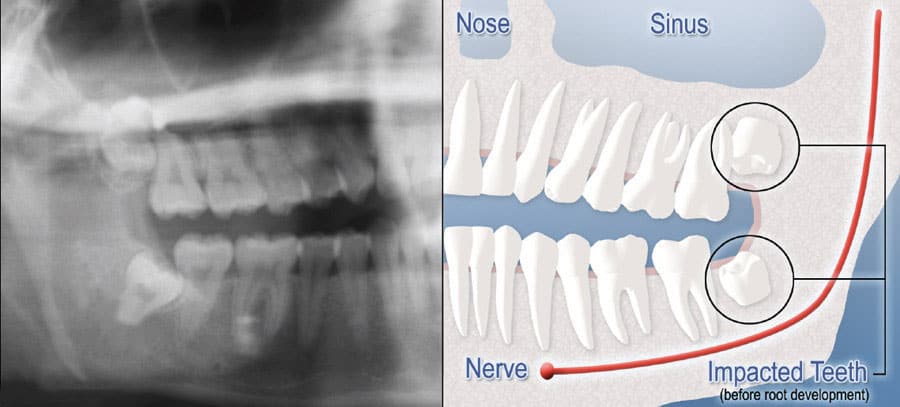
See the dental implant process.
Types Of Impactions
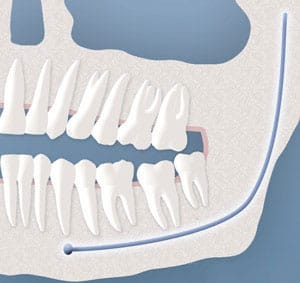
Soft Tissue
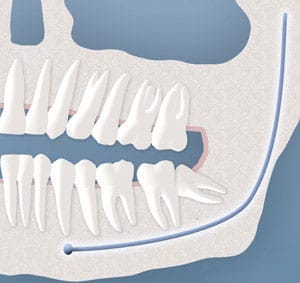
Partial Bony
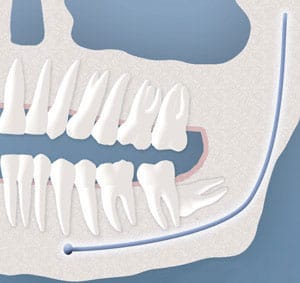
Complete Bony
Soft Tissue
Partial Bony
Complete Bony
Oral, Facial, and Dental Surgery Services
Surgeons Peter H. Kim, DDS; Serv S. Wahan, DMD, MD; Daniel T. Brady, DDS; and Dustin Altmann, DMD, Dr. Gross, DMD, MD, provide a full scope of oral and maxillofacial surgery, from corrective jaw surgery and wisdom tooth removal to advanced dental implant and bone grafting procedures, as well as diagnosis and treatment of facial pain, facial injuries, and TMJ disorders. Our clinical team is highly trained in assisting with I.V. sedation in a modern, state-of-the-art office setting, so you can receive care comfortably and safely.
Board-Certified Oral & Maxillofacial Surgeons in Washington State
- Board-Certified Specialists
- Trusted by Referring Dentists
- State-of-the-Art Technology
- Proven Outcomes & Satisfaction
- Personalized Patient Experience
- Comprehensive Care
- Advanced Surgical Expertise
- Safe Sedation
- Four Local Offices
What Our Patients’ Say
Dr. Kim and the whole staff are as good as they get. Fast and efficient, they work together like a swiss watch. Great follow up. Knowledgeable staff. I would highly recommend that you give them a try if you are looking for the best option for your dental needs.
5 stars all the way. I’d give them 10 stars if I could!!!! Mark D. / Seattle, WA
Mark D. / Seattle, WA
Dr. Kim and the whole staff are as good as they get. Fast and efficient, they work together like a swiss watch. Great follow up. Knowledgeable staff. I would highly recommend that you give them a try if you are looking for the best option for your dental needs.
5 stars all the way. I’d give them 10 stars if I could!!!! Mark D. / Seattle, WA
Mark D. / Seattle, WA
Dr. Kim and the whole staff are as good as they get. Fast and efficient, they work together like a swiss watch. Great follow up. Knowledgeable staff. I would highly recommend that you give them a try if you are looking for the best option for your dental needs.
5 stars all the way. I’d give them 10 stars if I could!!!! Mark D. / Seattle, WA
Mark D. / Seattle, WA
FAQs
What does it actually mean when a wisdom tooth is “impacted”?
An impacted wisdom tooth is one that doesn’t have enough room to fully come in. It may be trapped under the gum, partially visible, or stuck against another tooth. Because it can’t erupt properly, it often becomes harder to keep clean and may lead to problems over time.
Are impacted wisdom teeth always painful?
Not always. Some people don’t feel pain right away, even when a tooth is impacted. However, impacted teeth can still cause issues like infection, swelling, or pressure on nearby teeth, which is why they’re often evaluated before symptoms become severe.
Why do dentists often recommend removing impacted wisdom teeth instead of waiting?
Impacted wisdom teeth can be difficult to clean and may increase the risk of infection, gum problems, or damage to nearby teeth. Removing them before complications develop can help reduce future dental issues, even if they aren’t currently causing pain.
Is there a certain age when impacted wisdom teeth should be removed?
There isn’t one specific age that applies to everyone. However, wisdom teeth are commonly evaluated in the late teens or early adulthood. Bone density, tooth position, and overall oral health all play a role in determining timing.
What happens if impacted wisdom teeth are left untreated?
Leaving impacted wisdom teeth in place can increase the risk of infection, crowding, or damage to nearby teeth. In some cases, cysts or chronic inflammation can develop around the impacted tooth, which is why monitoring or removal may be recommended.
Will all four wisdom teeth need to be removed if only one is impacted?
In some cases, the nerve that provides feeling to the lower lip and chin sits too close to where an implant needs to be placed. Repositioning the nerve creates space so implants can be placed safely without putting pressure on the nerve.