
Oral Surgeon in Mill Creek, WA
Most people do not go looking for an oral surgeon. Their dentist hands them a referral and says this one is beyond what we do here. If that is why you are reading this, you are in the right place.
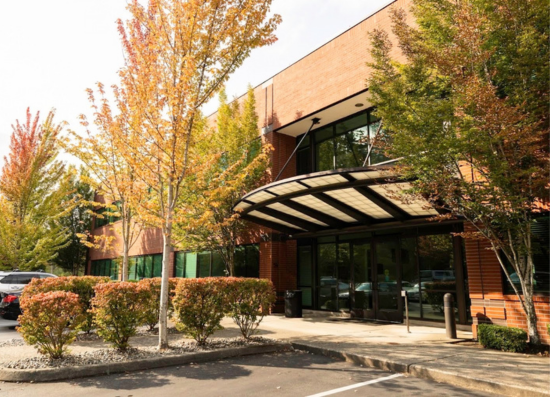
OM3 Oral Maxillofacial & Implant Surgery runs its Mill Creek office at 16708 Bothell Everett Hwy, Suite 100. Five board-certified surgeons work across our four Snohomish County offices, including Dr. Serv S. Wahan, DMD, MD, who holds both a dental degree and a medical degree. Call 425-743-0227 to book a consultation.
You do not need a referral to come in, and many patients call us directly.
What do oral surgeons treat that a general dentist does not?
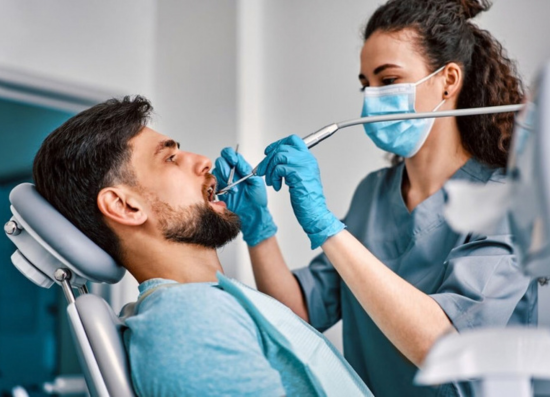
Oral and maxillofacial surgeons handle surgery of the mouth, jaws and face. At Mill Creek that means dental implants, wisdom teeth, difficult extractions, bone grafting, jaw joint problems and facial injuries. We also diagnose and biopsy lesions in the mouth. Your dentist can remove a straightforward tooth. They send us the ones sitting in bone, near a nerve, or broken at the gum line.
Extractions and implant placement are the two things we do most often.
An implant is a titanium post placed into the jaw to replace a missing tooth root. We place it, and your own dentist makes and fits the crown that sits on top. Both of us work from the same treatment plan.
- Impacted Wisdom teeth and third molar removal
- Bone grafting, sinus lifts and ridge augmentation
- Exposure and bonding of impacted canines, usually with your orthodontist
- Jaw joint pain and TMJ disorders
- Facial injuries, including fractured facial bones
- Oral lesions that need diagnosis or biopsy
Testimonials From Our Mill Creek Patients
Who will you see at the Mill Creek office?
OM3 has five oral and maxillofacial surgeons: Dr. Peter H. Kim, DDS, Dr. Serv S. Wahan, DMD, MD, Dr. Daniel T. Brady, DDS, Dr. Dustin Altmann, DMD, and Dr. Michael Gross, DMD, MD. Each completed surgical residency training after dental school, then went on to pass board certification. Washington rule WAC 246-817-420 requires every dentist in a group practice to be identified as a general dentist or a specialist. All five are board-certified specialists in oral and maxillofacial surgery.
None of us practice general dentistry, so there are no cleanings, fillings or crowns here. We do the surgical work your dentist refers out, then send you back to them.
Two of the five hold a medical degree alongside the dental degree. That matters for jaw surgery, facial trauma, and patients with complicated medical histories.
Our surgeons rotate between the four offices on a five week cycle, so the surgeon working here this week may be at another office next week. We tell you who you are booked with when you schedule. Where the rotation allows, we keep you with the same surgeon from consultation through to surgery.
If your dentist asked for a particular surgeon, tell us when you call and we will work to that where we can.
What happens at your consultation
Complete your registration and health history online if you can. It saves time at the front desk. Bring photo ID, both your dental and medical insurance cards, and a current medication list. Blood thinners and bone medications matter here. Do not leave them off.
Most surgical planning needs a three dimensional view. We use cone beam CT scanning in the office. It shows where nerves, sinuses and roots actually sit, which a flat X-ray cannot. Implant cases nearly always need it.

What are your sedation options?
Anxiety is the most common reason people put off oral surgery. You have choices. Local anesthetic numbs the area while you stay awake, which suits shorter procedures. Intravenous sedation puts you into a light sleep, and most patients remember almost nothing afterward. General anesthesia is available for longer or more complex cases. Our clinical team is trained to assist with all of it.
We review your medical history before recommending anything, since some conditions and medications rule certain options out. Heart and lung conditions, sleep apnea, and some prescriptions all change the picture. This is why the health history form matters more than it looks.
If you have sedation, someone must drive you home. We reschedule if no one is there to collect you. Say at the consultation if arranging a ride is difficult, because it changes how we plan the day.
What does oral surgery cost, and will insurance cover it?
Cost depends on the procedure, whether you need grafting, and which sedation you choose. You get a written estimate at the consultation, before anything is booked. We work with most dental insurance carriers and bill your plan as a courtesy. Some oral surgery goes to medical insurance rather than dental.
Coverage varies widely between plans, and two patients having the same procedure can pay very different amounts. Our administrative team checks your specific benefits and gives you an expected out of pocket figure before you commit to anything. Fees your plan does not cover remain your responsibility. Most carriers respond within four to six weeks.
Three third party financing options are available: CareCredit, Cherry and Sunbit. You apply directly with the lender, and each sets its own terms. Payment is due at the time of service unless you arrange a plan in advance.

Why patients choose the Mill Creek office
Finding the Mill Creek office
The Mill Creek office sits at 16708 Bothell Everett Hwy, Suite 100, Mill Creek, WA 98012, on the highway running between Bothell and south Everett. Patients travel here from Mill Creek, Bothell, Lynnwood, Mukilteo and south Everett. It is the office that answers our main practice line.
Parking is a shared lot and it is free. Come in through the main doors. We are Suite 100 on the first floor, and the building has an elevator if you need the upper floors. The nearest cross street is 164th St SE.
Coming for sedation? Plan for your driver to wait nearby or to stay reachable by phone. Sedation appointments run longer than consultations, so build in more time than you think you need.
If you are travelling from Bothell or Lynnwood, allow extra time in the morning, as the Bothell Everett Highway backs up badly during the commute.

Book an appointment in Mill Creek
Call 425-743-0227 and ask for a consultation. Tell us what your dentist said, or just describe the problem if nobody referred you. Our scheduling coordinator finds a time and tells you which surgeon you will see.
We are accepting new patients at the Mill Creek office.
Questions we get about the Mill Creek office
Do I need a referral from my dentist?
No. Call 425-743-0227 and book a consultation yourself. Most patients do arrive by referral, because a general dentist spotted something outside their scope. It is not a requirement. If you do have a referral, bring the practice name so we can send our findings back to them.
How long does recovery take after wisdom teeth?
Most people take two to three days away from normal activity, with swelling usually peaking around the second or third day. The sockets themselves take several weeks to close. How many teeth come out, how deep they sit, and your own healing all change the timeline. Your surgeon gives you one specific to your case.
Bringing a teenager in for a wisdom teeth consultation
Yes. Late teens is when most third molar assessments happen, because the roots have not finished forming. A parent or guardian must attend and sign consent for anyone under 18. Bring their medical history and any orthodontic records, since orthodontists often flag wisdom teeth first.
What if another OM3 office has an earlier opening?
Your records move with you. We have four offices in Snohomish County, and our schedulers will tell you if a surgeon at another location can see you sooner. You are not tied to the office where you first consulted.