
Dental Implants – An Overview
The Surgical Procedure
The procedure to place a dental implant takes 30 to 60 minutes for one implant and only 2 to 3 hours for multiple implants. The number of appointments and time required, vary from patient to patient. The surgeon will bring great precision and attention to the details of your case.
Prior to surgery, you may receive antibiotics and for greater comfort, intravenous sedation or nitrous oxide (laughing gas). These options are discussed with you at your consultation appointment. A local anesthetic will be administered to numb the area where the dental implant will be placed.
When you are comfortable, the surgeon makes a small incision in the gum tissue to reveal the bone, creates space using special instruments, and gently inserts the titanium implant. The top of this implant is often visible through the gum. Sometimes it is better in the early stages of healing to have the implant covered by the gum tissue.
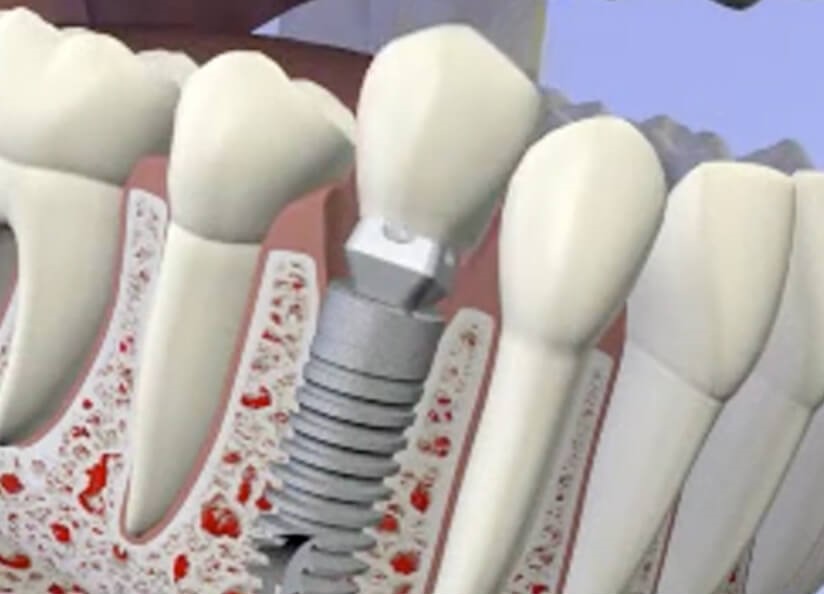
See the dental implant process.
Dental Implant Procedure: Step-by-Step
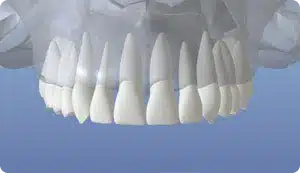
1 / Normal
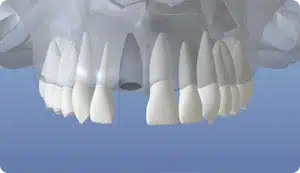
2 / Tooth Loss
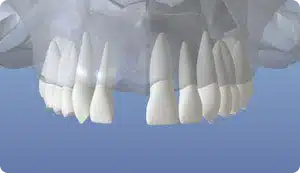
3 / Healed Bone
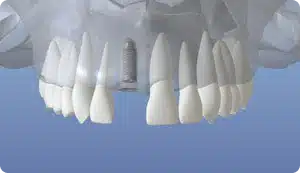
4 / Implant Placed
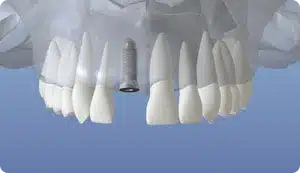
5 / Healing
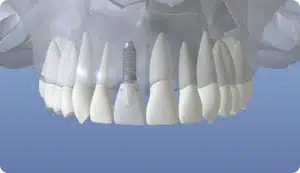
6 / Implant Restored
1 / Normal
2 / Tooth Loss
3 / Healed Bone
4 / Implant Placed
5 / Healing
6 / Implant Restored
Healing after Dental Implant Surgery
Now the healing begins. The length of time varies from person to person, depending upon the quality and quantity of bone. In some cases, implants may be restored immediately after they are placed. The surgeon will advise you on follow-up care and timing. After the initial phase of healing, the surgeon places an abutment (support post) or a healing cap onto the dental implant during a brief follow-up visit. This allows gum tissue to mature and provides access to the implant.
Occasionally, impressions are made at the time the implant is placed. This enables the crown to be ready when the implants have healed. How long your mouth needs to heal is determined by a variety of factors. Follow-up care (one to four appointments) is usually needed to ensure that your mouth is healing well and to determine when you are ready for the restorative phase of your treatment.
It may be beneficial to perform a soft tissue graft to obtain stronger, more easily cleaned and natural appearing gum tissue in the area around the implant. This process involves moving a small amount of gum tissue from one part of your mouth to the area around the implant. Most often, it is a brief and relatively comfortable procedure.
Whether it’s one tooth or all of your teeth that are being replaced, your dentist will complete the restoration by fitting the replacement tooth (crown) to the dental implant.
~ Find Out if Dental Implants Are Right for You ~
When are Dental Implants Placed?
Implants are often placed several months after extraction. At times, an implant may be placed immediately after extraction of a tooth. This may involve a little more risk, but it simplifies the process—you won’t have to wait for another appointment to place the implant. When infection or other problems with the bone are present, immediate implant placement is not the best treatment. If your tooth has been missing for some time, the adjacent support bone is likely to grow thinner and shrink. This occurs because the root of the natural tooth has to be present to stimulate the bone. As much as one third of your jaw’s thickness can be lost in the year following tooth extraction. If you are missing enough bone, you may benefit from having additional bone grafted into the area. This ensures the implant will be adequately supported when it is placed in the jaw.
How Many Implants Do I Need?
Most frequently, one implant per missing tooth is placed. Because many of the larger teeth in the back of your jaws have two or three roots, the most common approach is to replace missing back teeth with larger implants.
Oral, Facial, and Dental Surgery Services
Board-Certified Oral & Maxillofacial Surgeons in Washington State
- Board-Certified Specialists
- Trusted by Referring Dentists
- State-of-the-Art Technology
- Proven Outcomes & Satisfaction
- Personalized Patient Experience
- Comprehensive Care
- Advanced Surgical Expertise
- Safe Sedation
- Four Local Offices
What Our Patients’ Say
Dr. Kim and the whole staff are as good as they get. Fast and efficient, they work together like a swiss watch. Great follow up. Knowledgeable staff. I would highly recommend that you give them a try if you are looking for the best option for your dental needs.
5 stars all the way. I’d give them 10 stars if I could!!!! Mark D. / Seattle, WA
Mark D. / Seattle, WA
Dr. Kim and the whole staff are as good as they get. Fast and efficient, they work together like a swiss watch. Great follow up. Knowledgeable staff. I would highly recommend that you give them a try if you are looking for the best option for your dental needs.
5 stars all the way. I’d give them 10 stars if I could!!!! Mark D. / Seattle, WA
Mark D. / Seattle, WA
Dr. Kim and the whole staff are as good as they get. Fast and efficient, they work together like a swiss watch. Great follow up. Knowledgeable staff. I would highly recommend that you give them a try if you are looking for the best option for your dental needs.
5 stars all the way. I’d give them 10 stars if I could!!!! Mark D. / Seattle, WA
Mark D. / Seattle, WA
FAQs
What exactly is a dental implant and how does it replace a tooth?
A dental implant is used to replace the root of a missing tooth. It’s placed into the jawbone and later supports a replacement tooth above it. Many patients choose implants because they’re designed to feel stable and function more like a natural tooth when eating or speaking.
Is getting a dental implant considered oral surgery?
Yes, dental implant placement is considered an oral surgical procedure. The implant is carefully placed into the jawbone by an oral and maxillofacial surgeon. Before surgery, imaging and a full evaluation are completed so the procedure is planned around your anatomy and medical history.
What are the steps involved in the dental implant process?
The dental implant process usually happens in stages. This often includes evaluating the area, placing the implant, allowing time for healing, and then restoring the implant with a replacement tooth. The exact steps can vary depending on bone support and how long the tooth has been missing.
How long does it take to heal after dental implant surgery?
Healing time can vary from person to person. After the implant is placed, the jawbone needs time to heal around it before the final restoration is completed. Your surgeon will explain what healing looks like in your case and how to care for the area during recovery.
Will a tooth be missing while the implant heals?
This depends on the location of the implant and the treatment plan. In some cases, a temporary option may be used during the healing period. In other cases, a temporary replacement may not be necessary. These details are reviewed during the consultation so expectations are clear.
Can dental implants be placed if a tooth has been missing for a long time?
In many cases, dental implants can still be considered even if a tooth has been missing for an extended period. Bone support and overall oral health are evaluated to determine what options are available and whether additional procedures may be needed before implant placement.