
Ridge Augmentation
What is a ridge augmentation?
A ridge augmentation is a common dental procedure often performed following a tooth extraction. This procedure helps recreate the natural contour of the gums and jaw that may have been lost due to bone loss from a tooth extraction, or for another reason.
The alveolar ridge of the jaw is the bone that surrounds the roots of teeth. When a tooth is removed an empty socket is left in the alveolar ridge bone. Usually this empty socket will heal on its own, filling with bone and tissue. Sometimes when a tooth is removed the bone surrounding the socket breaks and is unable to heal on its own. The previous height and width of the socket will continue to deteriorate.
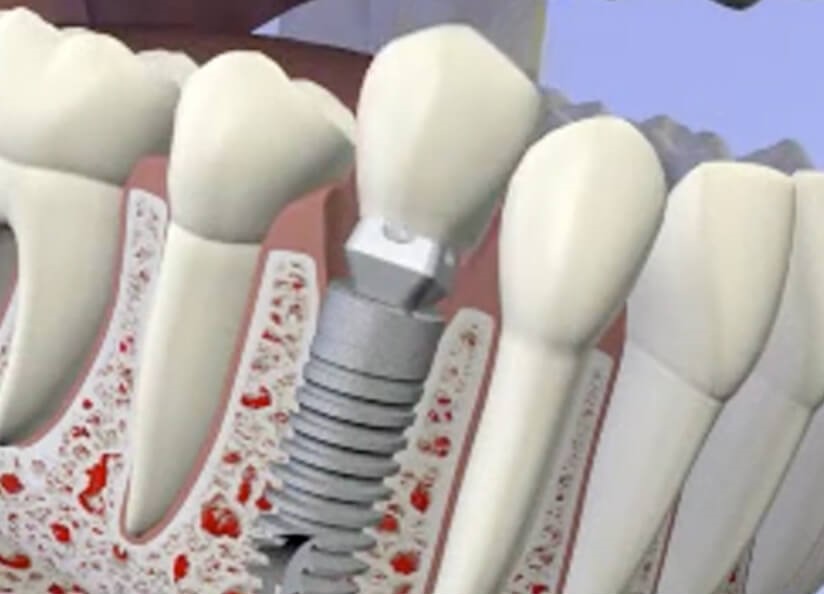
Rebuilding the original height and width of the alveolar ridge is not always medically necessary, but may be required for dental implant placement or for aesthetic purposes. Dental implants require bone to support their structure and a ridge augmentation can help rebuild this bone to accommodate the implant.
How is a ridge augmentation accomplished?
A ridge augmentation is accomplished by placing bone graft material in the tooth socket. It is often done immediately after the tooth is removed to avoid the need for a second procedure later. Next, the gum tissue is placed over the socket and secured with sutures. Dr. Kim, Dr. Wahan, Dr. Brady or Dr. Altmann may choose to use a space-maintaining product over the top of the graft to facilitate new bone growth. Once the socket has healed, the alveolar ridge can be prepared for dental implant placement.
A ridge augmentation procedure is typically performed in Drs. Kim, Wahan, Brady and Altmann’s office under local anesthesia. Some patients may also request sedative medication.
Oral, Facial, and Dental Surgery Services
Board-Certified Oral & Maxillofacial Surgeons in Washington State
- Board-Certified Specialists
- Trusted by Referring Dentists
- State-of-the-Art Technology
- Proven Outcomes & Satisfaction
- Personalized Patient Experience
- Comprehensive Care
- Advanced Surgical Expertise
- Safe Sedation
- Four Local Offices
What Our Patients’ Say
Dr. Kim and the whole staff are as good as they get. Fast and efficient, they work together like a swiss watch. Great follow up. Knowledgeable staff. I would highly recommend that you give them a try if you are looking for the best option for your dental needs.
5 stars all the way. I’d give them 10 stars if I could!!!! Mark D. / Seattle, WA
Mark D. / Seattle, WA
Dr. Kim and the whole staff are as good as they get. Fast and efficient, they work together like a swiss watch. Great follow up. Knowledgeable staff. I would highly recommend that you give them a try if you are looking for the best option for your dental needs.
5 stars all the way. I’d give them 10 stars if I could!!!! Mark D. / Seattle, WA
Mark D. / Seattle, WA
Dr. Kim and the whole staff are as good as they get. Fast and efficient, they work together like a swiss watch. Great follow up. Knowledgeable staff. I would highly recommend that you give them a try if you are looking for the best option for your dental needs.
5 stars all the way. I’d give them 10 stars if I could!!!! Mark D. / Seattle, WA
Mark D. / Seattle, WA
FAQs
How do I know if I’ve lost too much bone for an implant?
Many people don’t realize bone loss has happened until they’re evaluated for an implant. Changes often occur quietly after a tooth is removed. An exam and imaging are the only reliable ways to see whether the jawbone still has the shape and support needed.
How is ridge augmentation different from standard bone grafting?
Ridge augmentation focuses specifically on rebuilding the ridge of bone that supports teeth, rather than adding bone more generally. The goal is to restore the natural shape and volume of the jaw so it can properly support dental restorations.
Will ridge augmentation change the appearance or feel of my gums?
As healing progresses, the gums adapt to the restored bone underneath. The goal is to create a more natural contour that supports oral function and future treatment rather than creating an unnatural or bulky appearance.
What type of doctor usually performs ridge augmentation?
Ridge augmentation is typically handled by an oral and maxillofacial surgeon because it involves working directly with the jawbone. These procedures are performed in a surgical setting within the practice rather than a hospital for most patients.
How long after ridge augmentation do I need to wait before moving forward with an implant?
Healing time varies based on how much bone support is needed and how your body responds. Your surgeon will monitor the area and let you know when it’s appropriate to move forward rather than using a fixed timeline.
How is healing checked after ridge augmentation?
Healing is monitored through follow-up appointments and imaging. These evaluations help confirm that the graft is integrating properly and that the ridge is ready for the next step in treatment planning.